

How to Layer Clothes for Men: A Fall Guide for the Gulf Coast
A practical guide to fall layering for men: base layers, mid layers, and outerwear, built around Pensacola's warm-weather timeline, not a colder climate.
Most layering guides are written for a fall that doesn't really happen here. They'll tell you to reach for a heavy wool coat in October, when Pensacola is still hitting 80 degrees in the afternoon. Layering done right isn't about piling on clothes. It's about building an outfit in stages so you can add or subtract pieces as the day (or the season) shifts underneath you.
Done well, layering gives you three things a single heavy piece never will: temperature control, more outfit flexibility, and a sharper, more finished look. Here's how to build the system, piece by piece.
The Base Layer: Fabrics, Fit, Function
The base layer sits closest to the skin, so its job is moisture control, not warmth. Breathable, moisture-wicking fabrics, like merino wool or a good technical synthetic, regulate your body temperature and keep sweat from lingering against your skin, which matters even more in our climate than in a drier, colder one.
Fit matters as much as fabric here. The base layer should sit close to the body without restricting movement. Check that the shoulder seam lines up with your actual shoulder, and that the hem sits long enough to stay tucked under whatever goes over it. A base layer that bunches or rides up undermines every layer you put on top of it.
Dress Shirts: The Workhorse Middle Layer
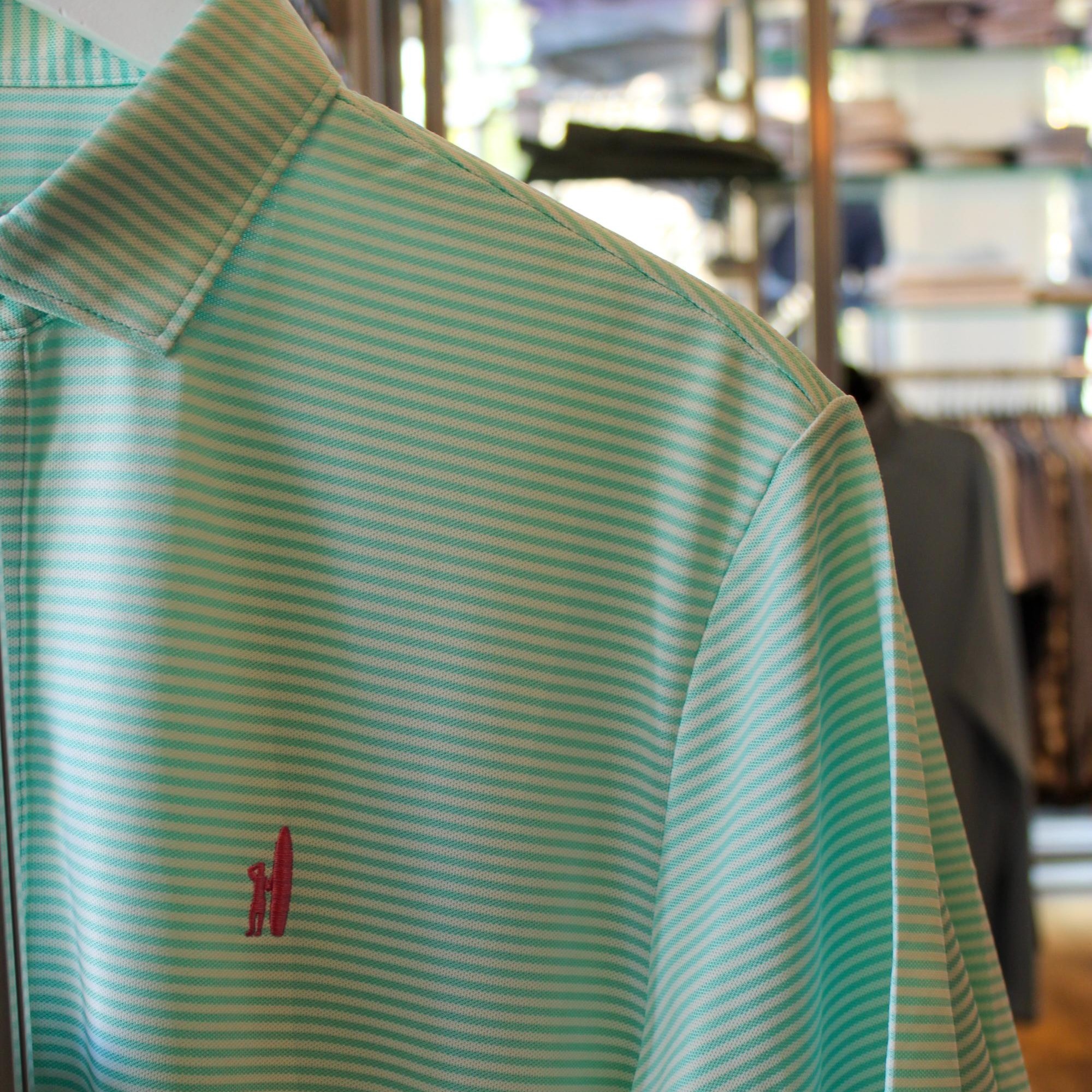
A dress shirt (or a well-made polo, depending on the occasion) is often the most versatile piece in a layered outfit: it can function as a standalone top or as the foundation under a sweater or jacket. Solid colors keep the layering clean and easy to build around; if you want extra polish, a crisp tee underneath brightens the whole stack.
Two small details separate an intentional look from a sloppy one: cuff length and sleeve peek. When you're layering a shirt under a jacket, roughly half an inch of cuff showing at the wrist reads as tailored, not accidental. And if you're leaving the shirt untucked under a lighter mid-layer, make sure the hem falls at a length that looks deliberate. This is exactly the kind of detail our tailoring team can dial in if you're working with a shirt that isn't quite right off the rack.
Mid Layers: Sweaters, Vests, and Cardigans
The mid layer is where you add warmth without adding bulk. Sweater weight matters more than most men think: a lightweight knit works for most of our fall, while heavier sweaters are better saved for the rare cold snap. Vests and cardigans are underused here. Both add a layer of warmth and structure without the sleeve bulk of a full sweater, which makes them a smart choice for a climate that rarely demands heavy insulation.
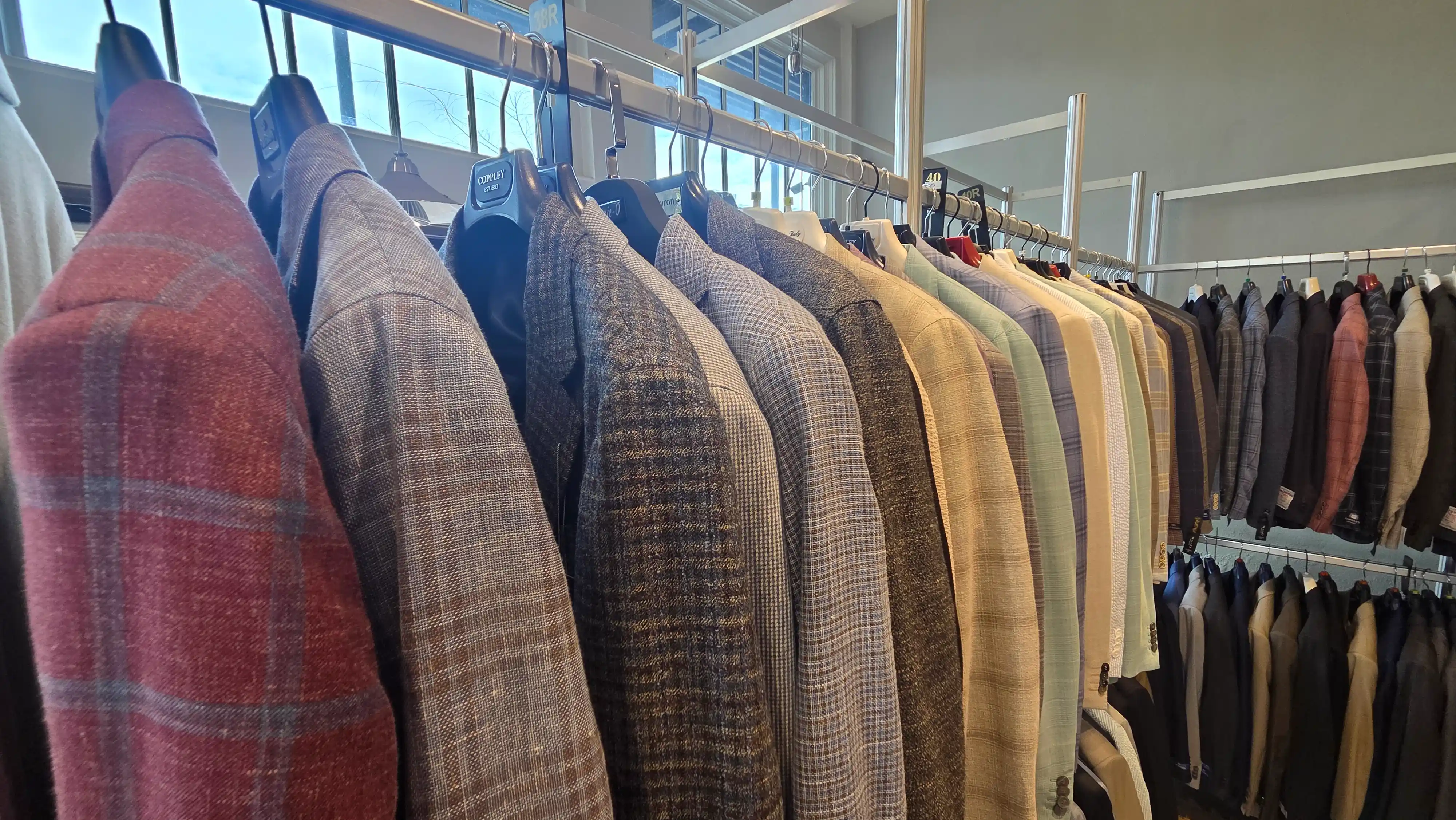
If you want a sharper alternative to a sweater altogether, a blazer works as a mid layer too. It adds structure and polish without adding thickness, which is often the better call for Pensacola's warmer fall days.
On texture and color: mix textures. A knit against a smoother shirt fabric adds visual depth without extra effort. For color, keep it simple: lighter shades closest to the body, richer tones building outward, and one accent color at most. Contrasting textures and a clear color hierarchy are what make a layered outfit look put-together instead of thrown-on.
The Outer Layer: Coats, Jackets, and Proportion
Outerwear is the layer most affected by our climate. You'll get far more wear out of a lighter jacket than a heavy coat most years. Whatever you choose, sizing matters: an outer layer should fit comfortably over what's underneath without looking loose or overstuffed. If rain's a factor, a weather-resistant shell does the job without adding unnecessary warmth.
A simple rule for proportion: three visible layers is usually the cleanest silhouette. Keep no more than two cuffs visible at the wrist, and let each layer run slightly shorter than the one underneath it. That small step-down in length is what keeps a layered outfit looking intentional rather than bulky.
When One Layer Is Enough
This is where Gulf Coast dressing really diverges from the rest of the country. In most of the U.S., "fall layering" season starts in September. Here, you may not need more than one solid layer until well into October or later, and that's fine. One strong piece, worn confidently, still counts as dressing well.
A crisp Oxford shirt with chinos, a heavyweight tee with dark denim, or a fine-gauge knit with tailored trousers: each of these works entirely on its own. The trick to good layering isn't wearing the most pieces; it's knowing when you don't need to. If a warm afternoon catches you mid-layer, shed from the outside in rather than pulling everything off: outer layer first, then mid layer, landing back at a single piece that still looks finished.
Accessories: The Accent Layer
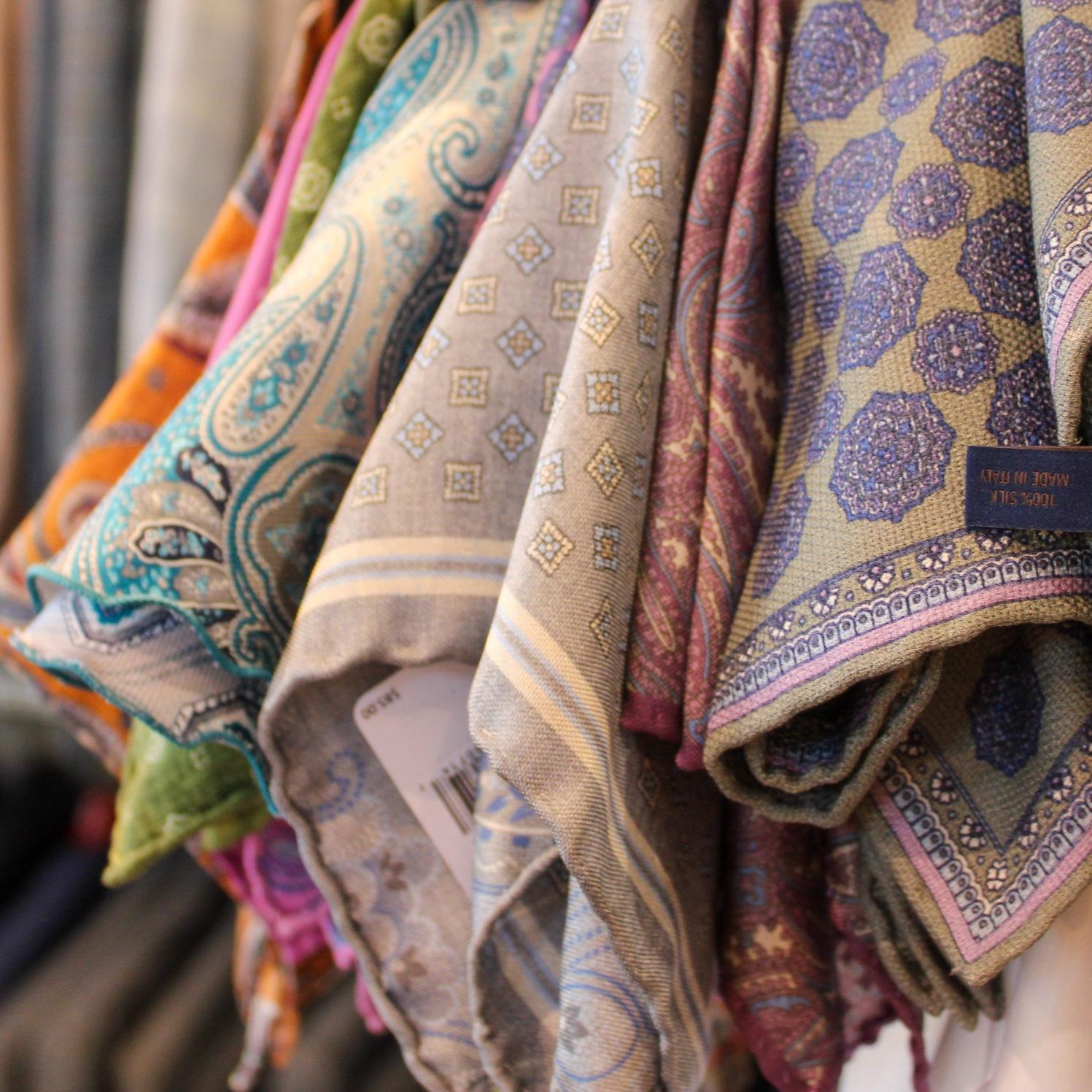
A scarf or hat can function as its own kind of layer, adding warmth or polish without changing the outfit's structure. The rule here is restraint: one accent piece is usually enough. Let the base of the outfit stay understated so the accessory actually reads as intentional, not competing for attention.
The Bottom Line
Layering in a warm-weather climate isn't about following a cold-weather playbook. It's about understanding which pieces do real work and which ones are just for show. Build from a solid base layer, choose a middle layer that earns its place, and treat the outer layer as optional until the temperature actually asks for it.
If you're working through your own fall rotation and want a second opinion on fit, especially on dress shirts and layering pieces that need a little tailoring to sit right, stop by the shop or book a styling appointment. Getting the fit right is what makes any layering system actually work.
.svg)